
1992 - 2024
The Temporal Nature of Art

The original sketch for this piece was made for the Belgrade exhibition "Zovem se sasvim obično, Bijenale Mladih". My installation was envisioned as a 2-meter tall sculpture standing in the gallery. I was excited about this opportunity, believing it could be a turning point in my art career. I carefully thought out every aspect of my project—colors, concept, everything.
I'll outline the main ideas for you. The piece replicates features such as a sink, faucet, soap dispenser, and toothbrush holder to create an impression of a typical Balkan working-class apartment bathroom. We all begin our days in this area with our rituals: brushing teeth, washing faces, combing hair, and putting on makeup. Sometimes, it’s a place for morning conversations or arguments. These rituals are our preparation for the outside world, a necessary adjustment to meet societal expectations.
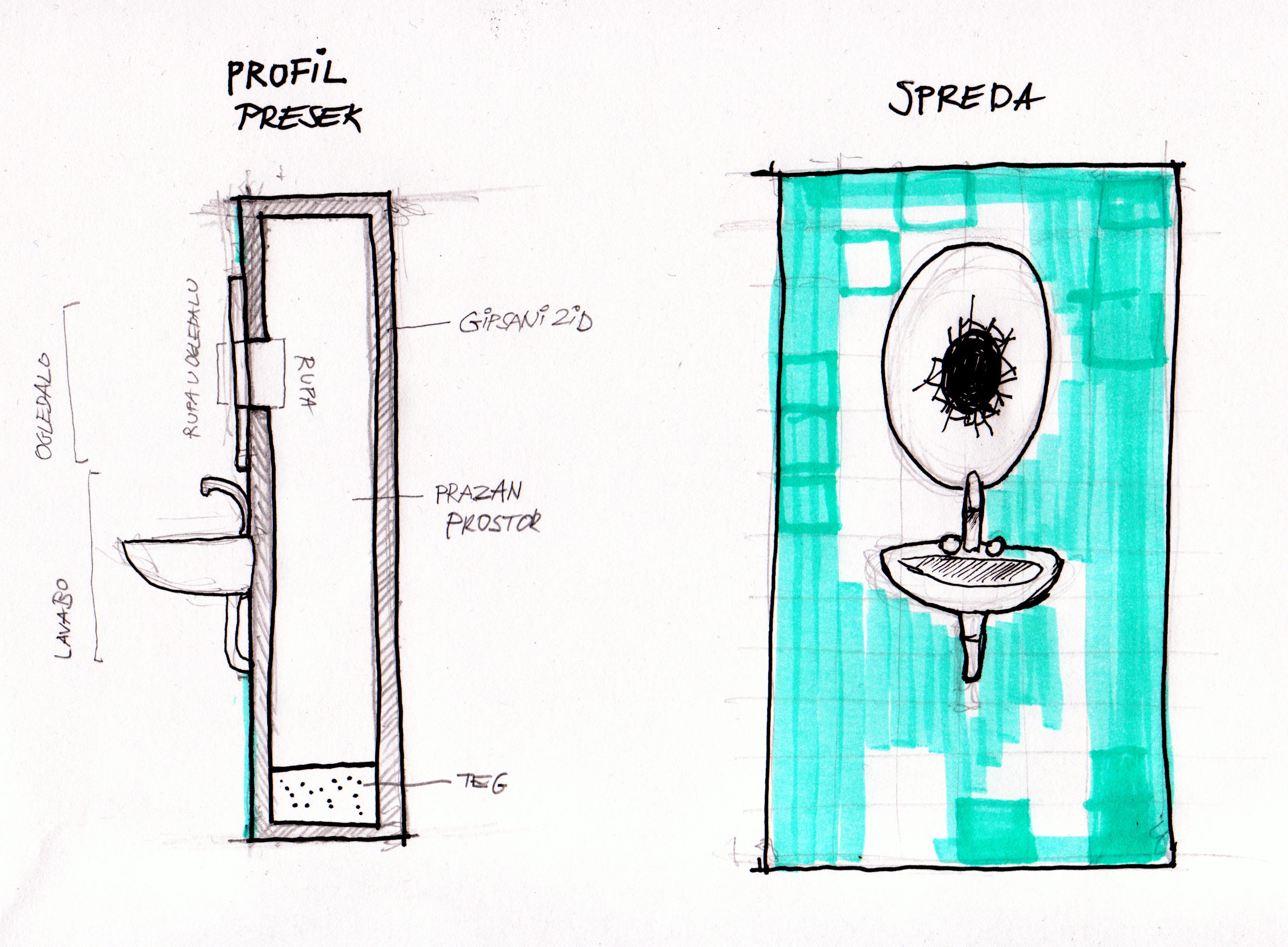
The bathroom elements in my installation show those found in an average working-class home in Blok 45, New Belgrade, for example. A regular sink with a worn-out toothbrush, the plastic threads open like a lotus flower but not yet ready to be thrown away. A toothpaste tube from which a few more squeezes can be extracted, only if you squeeze really hard. There's soap with a coin pressed into it to prevent it from slipping, reflecting the frugality of working-class life. Who would waste money on a soap dish that has been broken several times? The mirror is the focal point of the bathroom, but in my installation, it only has a hole in it instead of a reflection.
This hole symbolizes our lost identity in the existential struggle and fear. It represents how all we think about is surviving, eating, and providing for someone or something. Our appearance and who we are no longer matter; what matters is that we perform the ritual and fulfill our obligations to be deemed worthy by society. The hole in the mirror is the source of our insecurity, lost identity, and lost purpose. The void it creates is filled with inadequate substitutes that fail to satisfy our sense of identity or purpose. Who am I really? The question is raised. The problem is that, although we may know what we serve, we do not know who we are, and this is highlighted by the anxiety and uneasiness it creates. This raises further questions about whether service is our true purpose and, if so, why we are so far from happiness and harmony.
I was pleased with this concept, envisioning it as a sculpture observed from multiple sides. My proposal was accepted, and later on I was asked if it was possible to adapt it to a wall installation. It might change the idea slightly, though the concept remained intact, and I agreed to the request.
However, a few weeks before the exhibition, the curator updated me that they planned to exhibit my piece in the toilet of Cvijeta Zuzorić's exhibition spaces. Startled, I did not know how to respond. Just because the art resembled a bathroom element didn't mean it belonged there. If they had asked me to create art specifically for a toilet, I would have approached it differently. But this wasn't meant for a toilet; it was made for the gallery. I expressed concerns to the curator, acknowledging the unconventional idea but questioning why my art should be reduced to the toilet while other artists would be exhibited in the gallery. I didn't outright reject the idea but decided not to proceed with it, feeling it was a good opportunity but not the right one for me. Deserved or not, I ghosted them three days before the exhibition. I was speechless.
Months later, while working on an exhibition with Toast Project Space, I discussed potential works with curator Gabriele Tosi. Accidentally showing him sketches of my initial artwork for the Belgrade biennale, he immediately suggested we proceed with it. My initial reaction was, "Are you sure you want to exhibit this?" I was shocked, but relieved it would be displayed in the actual exhibition space.
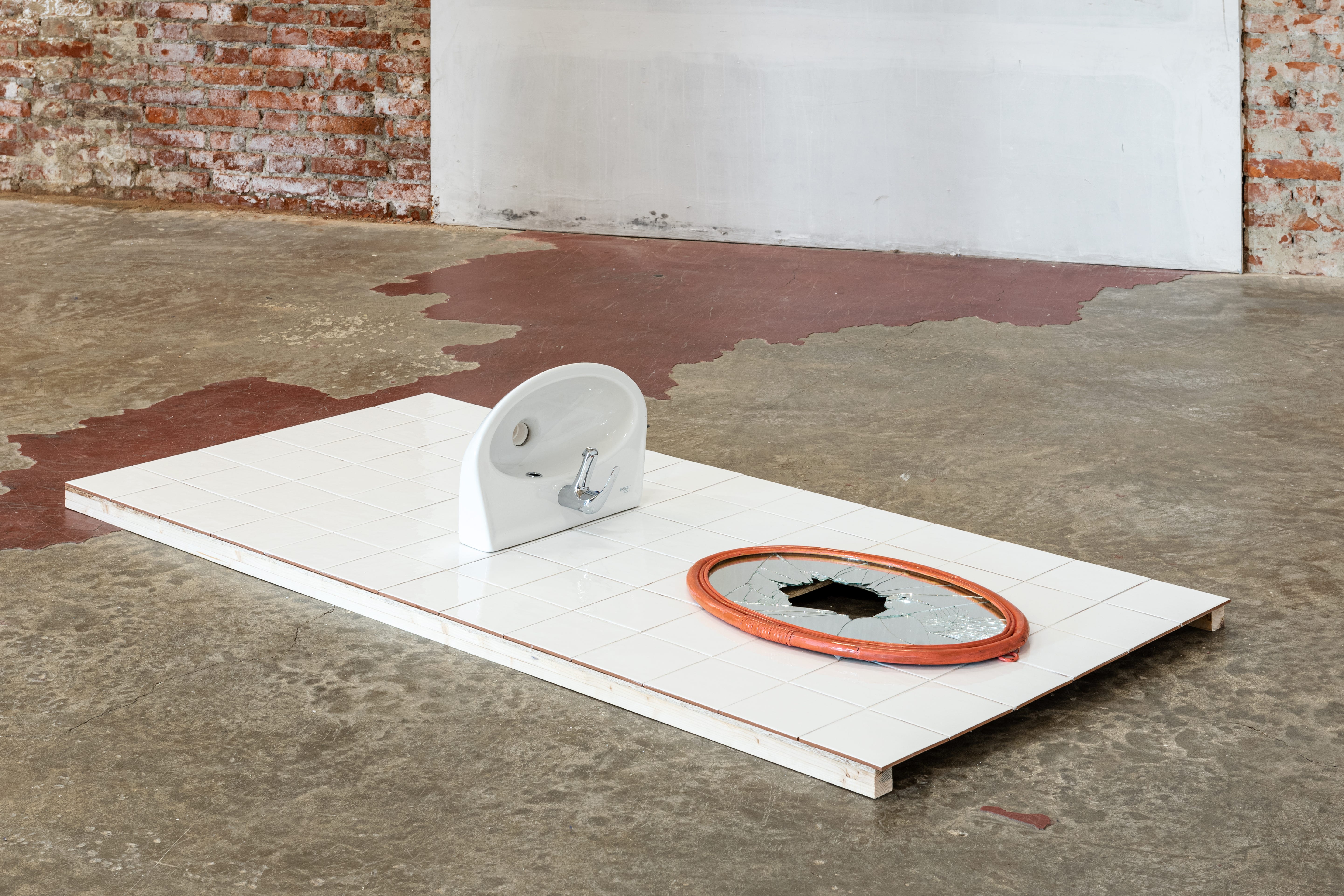
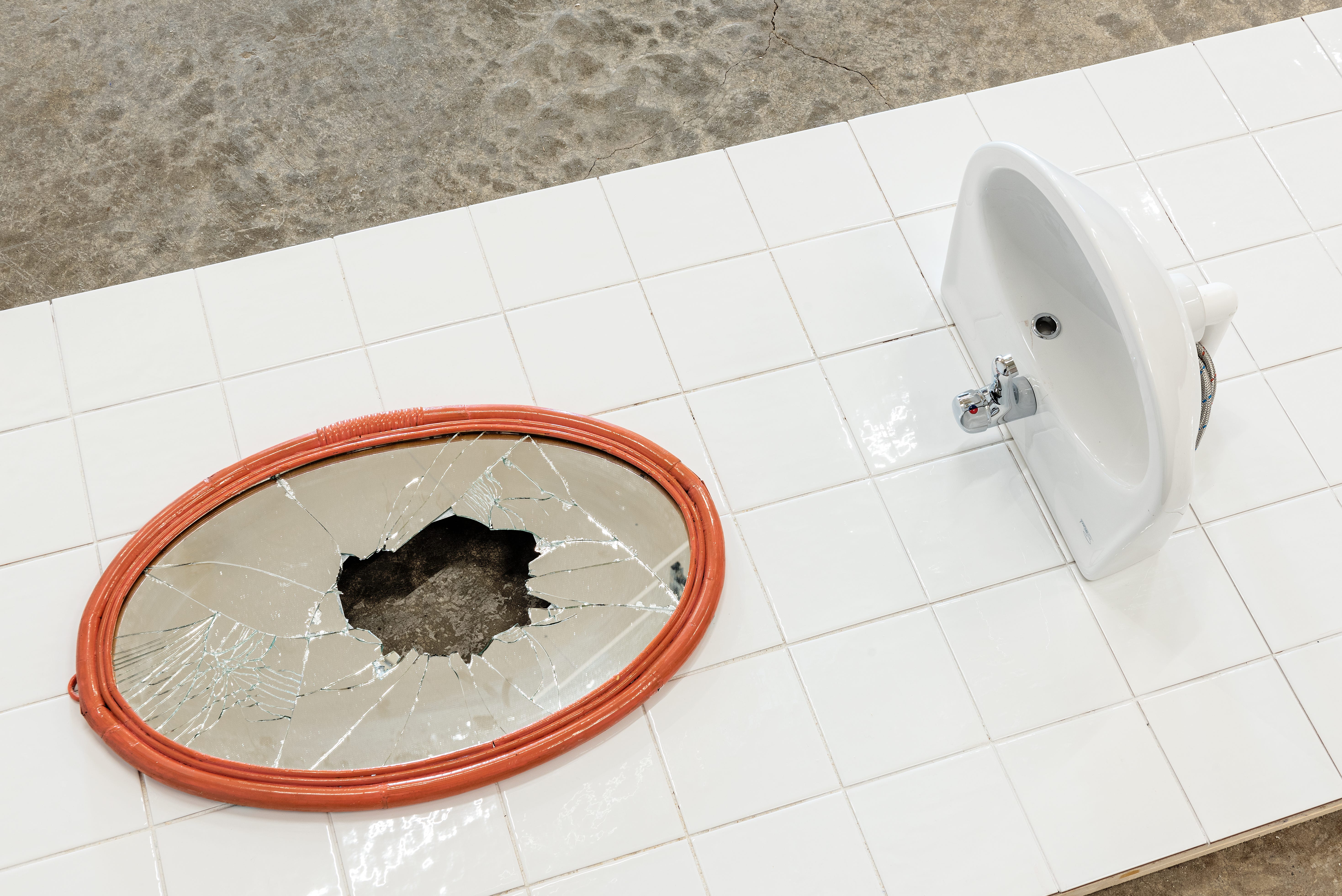
Initially, I wanted to mount it on the wall so the hole in the mirror would be at the viewer's eye level. However, during construction, Gabriele suggested leaving it on the floor. I had to leave this thought overnight. Eventually, I accepted his proposal but decided to position it as if it were buried, similar to the dead, though I mistakenly aligned it north-south instead of west-east as is customary in Montenegro. Despite this, it perfectly told the story intended for it.
I decided to bury the lifestyle of Balkan existential struggles. The struggle born in 1992 during the inflation crisis because my mother’s anxieties were passed to me even before my birth. This is the main reason I use 1992, not 1993 when I was born; these struggles began before I was born. I reject a life of mere survival, counting pennies; there is no place for art in a world like that.
After the exhibition at the Manifattura Tabacchi, the installation likely got dismantled and recycled, as I couldn’t keep it in my small studio in Florence. Perhaps it was meant to be seen and then destroyed, leaving only photographs and memories. Like the Romans who burned their dead, leaving only ashes, my installation remains in its documentation and the memory of its brief, yet impactful, existence.