OPNA
Escaping the Trap of Magical Thinking

In the world of art, there are creations that spring forth from the depths of the subconscious, like messages whispered by the universe itself. These artistic manifestations frequently defy rational reason and come to life in a realm beyond our conscious knowledge. Such was the situation with my art piece "Opna," she arose from the depths of my creative psyche, guided by powers I cannot fully comprehend.
As an artist, I have always been drawn to symbolism and its presence in everyday situations. However, I refrain from embracing superstition, preferring to view these symbols as messages from the universe—a sort of “sticky note” from the universe. Within my creative process, I find myself gracefully moving between the realms of the spiritual and the material, acting as a conduit for visions eager to take form in our world. It's as if the universe has a message to give, and it's my job as an artist to make it a reality.
In this enigmatic process, Opna was born, and as I gazed upon the finished artwork, I found myself questioning its meaning. What was the message? How could I capture its essence? It was my lover, my loyal friend, who believes in me to the point of idealism bordering on delusion, that suggested the name "Opna", which means "Membrane" in my mother tongue. The connection between the artwork and the anatomical membrane of the eye, the conjunctiva, was uncanny.
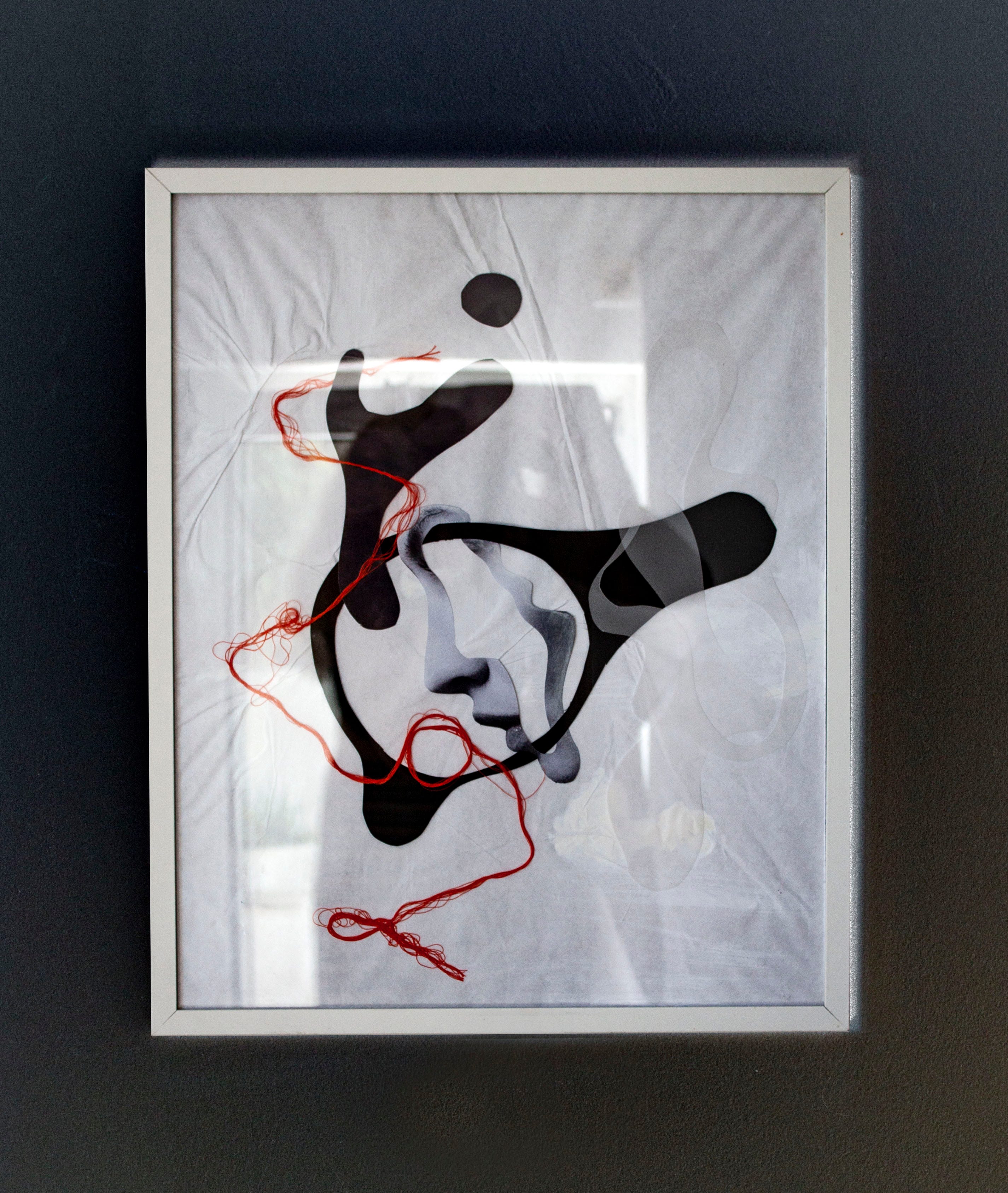
The conjunctiva is a thin, transparent membrane that protects the front surface of the eye from foreign particles while also allowing for smooth eyelid movement. Interestingly, it plays no role in vision itself. This curious parallel with the red thread used in my painting led me down a path of contemplation. In various cultures and superstitions, red thread is believed to possess protective qualities. It is worn as an amulet or talisman to protect against evil spirits, curses, and negative energy.
In the region of Montenegro and Serbia, we have a belief known as protection from the evil eye. This superstition holds that certain people can cause harm or misfortune to others just by casting envious or ill-wishing glances. While I am not superstitious, I do believe in the power of energy and intention. Accumulated negative energy, when focused on a specific target, can indeed affect it. My father, in his own peculiar way, offers a remedy for such situations: he suggests scratching one's backside. The history of this remedy is buried in mystery, having been passed down through generations in our family. Regardless of its efficacy, perhaps superstitions and rituals often emerge as coping mechanisms in the face of the unknown.
But what exactly does this art piece mean? To me, it is a message about seeking refuge in magical excuses and avoiding reality out of sheer conformity. I've seen innumerable people blame their situations on fate and metaphysical forces, adopting a defeatist attitude toward life. They choose to remain oblivious to their own defects, assuming that change for the better would occur without their involvement.
Achievement and positive transformation involve commitment, effort, and a willingness to address one's own inadequacies. Life is not a passive experience; it demands active participation. "Opna" reminds us to open our eyes and see the truth: that the only evil in our lives is often our own self-deception. The concept of "bad faith" as defined by Jean-Paul Sartre resonates with this message. It refers to a state of deception in which people deny their radical freedom. They instead embrace roles, identities, or beliefs that limit their freedom while absolving them of responsibility. They pretend to be determined by external factors, societal norms, or their roles, rather than acknowledging their inherent freedom to choose their actions.
Consider someone who is stuck in an unsatisfying career, certain that it is their "destiny" or that they have no other option. In their state of bad faith, they deny their freedom to change their circumstances and deceive themselves into accepting a limited existence.
This artwork serves as a mirror, reflecting the danger of living in this state of denial. It challenges us to confront our illusions and break free from our own limits. The red thread, which represents protection, serves as a metaphor for the illusory security we seek in magical thinking. Simultaneously, the artwork subtly mocks those who choose to be blind to these truths, offering a poignant critique of their choices.
Everyone sees art in their own unique way, and this one is no exception. As its creator, though, I believe its message is clear: "What I don't see won't hurt me." It is a taunting reminder to people who seek refuge in mystical explanations and refuse to see the reality that is right in front of them. They unwittingly shield themselves from their own truth, ultimately limiting their potential for growth and change. In the end, "Opna" advises us to embrace our inherent freedom, to shed the illusions that bind us, and to take charge of our lives. For only when we acknowledge our true selves can we break free from the chains of self-deception.
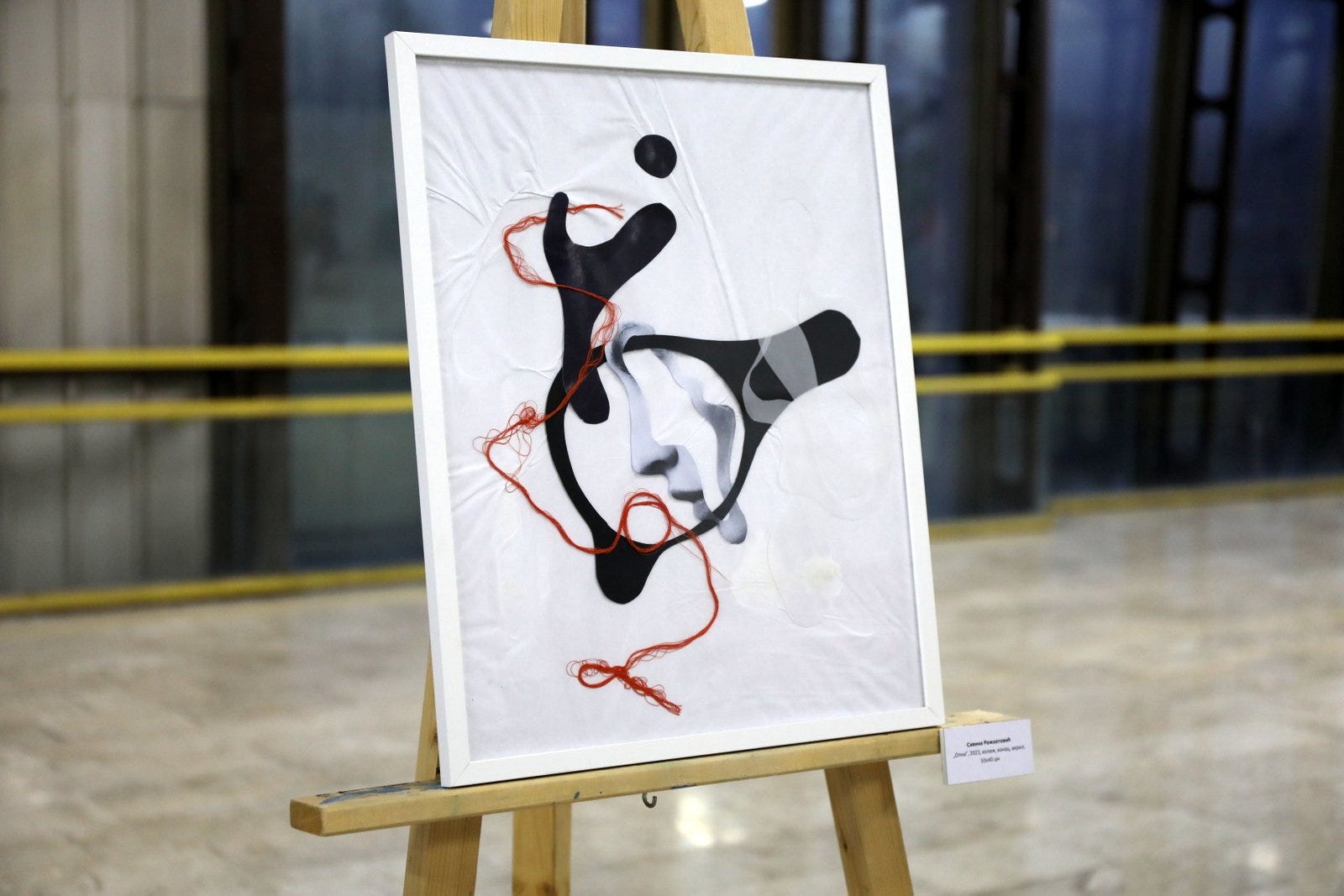
I hope that as spectators stand in front of this artwork, they allow its message to infiltrate their minds. Let it serve as a reminder that we have the ability to mold our own destiny, not mystical forces or external events. Embracing freedom, letting go of illusions, and stepping courageously into the light of one's own truth.
In our world, there are countless distractions and temptations that can lead us astray. It is all too easy to turn to magical thinking, to blame external forces, and to avoid the hard work of facing our own shortcomings. I want this art piece of mine to be a reminder, however, that true growth and transformation come from inside. We must be willing to face our illusions, break free from self-imposed constraints, and accept our inherent freedom.
Remember, "What I don't see won't hurt me," but what you do see has the power to set you free.
With love,